How to Choose a Condo or HOA Law Firm
A guide for Michigan & Illinois community association boards. Jump to your question:
Ask Before You Hire
- How much of your practice involves representing condominium and homeowners associations?
- What is your normal response time when a board has a legal question?
- How do you charge, and how should our board compare pricing models?
Choosing legal counsel is one of the more important decisions a condominium or homeowners association board makes. The right attorney helps a board prevent disputes, enforce its documents, collect assessments, and make informed decisions before problems become expensive. But not every real estate attorney regularly represents community associations.
Condominium associations and homeowners associations sit at the intersection of statutes, governing documents, finances, and neighbor relationships, and their attorneys must also understand the practical realities facing volunteer boards. Here is what to consider, and what to ask, before you hire.
Focus
How Much of the Law Firm's Practice Is Actually Condo and HOA Law?
One of the first things a condominium or homeowners association board should determine is how much of the law firm’s day-to-day practice actually involves community associations. There is a meaningful difference between a general practitioner or real estate lawyer who occasionally handles an HOA matter and a law firm whose attorneys work with condominium and homeowners associations every day.
A general practice or real estate lawyer
- Handles an HOA matter occasionally, among many practice areas
- Researches association statutes as issues come up
- One attorney stretched across every kind of matter
- No systems built around association collections or governance
A community association law firm
- Works with condo & HOA boards every day
- Lives in the statutes, case law, and governing documents that control associations
- Focused teams for collections, documents, general counsel, and litigation
- Processes designed for associations, liens, fee recovery, elections, enforcement
The Hirzel Law Answer
At Hirzel Law, more than 80% of our current work involves directly representing community associations. The remainder involves closely related real estate matters, including representation of community association banks and corporate real estate clients. We do not maintain unrelated practice areas, and we do not represent individual owners against community associations. Representing condominium and homeowners associations is what we do!
80%+of our practice is community associations
Experience
Has the Law Firm Represented Community Associations Like Yours?
Community associations come in many forms, including high-rise condominiums, site condominiums, townhome communities, single-family homeowners associations, mixed-use developments, commercial condominiums, master associations, and large planned communities. They also vary significantly in size, finances, management structure, and complexity.
A two-unit condominium and an 8,000-unit community do not operate the same way, but both need legal advice that accounts for their governing documents, applicable law, finances, and practical circumstances.
Boards should ask how many associations the firm has represented, whether it represents both self-managed and professionally managed communities, and whether its attorneys regularly handle the problems the board is likely to encounter.
The Hirzel Law Answer
Hirzel Law has represented more than 2,000 community association clients in Michigan and Illinois. Our attorneys have represented condominiums, homeowners associations, master associations, and other community associations ranging from two-unit communities to those with more than 8,000 units. We represent both self-managed associations and associations that work with professional management companies.
Depth
Can the Law Firm Handle the Full Range of Problems a Community Association Faces?
A condominium or HOA board’s legal needs rarely stay confined to one category. A community association that initially hires an attorney for collections may later need help with a Fair Housing accommodation, a difficult annual meeting, a construction defect, a governing document amendment, a developer turnover dispute, or litigation.
Boards should therefore consider whether their law firm has sufficient depth to address both everyday legal questions and higher-risk matters. Common areas of community association law include:
- Bylaw Enforcement
- Condo & HOA Collections
- Construction Defects
- Developer Turnover
- Document Amendments
- Fair Housing
- General Counsel / Meetings
- Litigation
Some matters can be handled efficiently through standardized processes. Others require substantial judgment and experience, so it is important to determine whether a law firm has attorneys with varying levels of expertise and whether the hourly rate aligns with the level of service needed.
Similarly, has the law firm developed processes to improve efficiency that create value for your community association? Assessment collections are a good example. Many lawyers are capable of pursuing a debt. A community association law firm, however, may be able to create systems specifically designed around association collections, fee recovery, liens, foreclosure rights, bankruptcy issues, and communication with the board or manager.
Other matters can be much less forgiving. Litigation, Fair Housing disputes, developer turnover, construction defects, and governing document amendments can create significant financial or legal consequences if handled incorrectly.
The important question is not simply whether a lawyer can perform the work.
Boards should consider how frequently the firm handles the issue and whether it has the experience, attorneys, and systems to handle it effectively and efficiently.
Litigation
Does the Firm Have Meaningful Community Association Litigation Experience?
Community association litigation differs from an ordinary dispute between two businesses. The parties may remain neighbors after the lawsuit ends. A decision involving one owner may affect how the governing documents are interpreted or enforced against hundreds of other owners. Litigation expenses are paid from association funds, and an unfavorable ruling can affect future board decisions.
For those reasons, community association litigation requires more than courtroom experience. The association’s attorney should help the board understand the strength of its legal position, the expected costs, settlement options, litigation risk, the potential effect on future enforcement, and how the dispute may affect the community as a whole.
A board does not need an attorney who recommends litigation every time there is a disagreement.
It needs attorneys who understand when litigation is necessary, when another approach may produce a better result, and how to protect the association when a lawsuit cannot be avoided.
Boards should also determine whether the firm’s attorneys who provide day-to-day legal advice can work directly with attorneys who regularly litigate community association disputes. Advice given before litigation should account for what may happen if the matter ultimately reaches court.
Communication
Does the Attorney Give the Board Clear, Practical Advice?
Boards hire community association attorneys to help them make decisions, not simply to identify legal issues.
Good legal advice should explain the board’s options, the risks associated with each, and the attorney’s recommended course of action. Board members are volunteers, so legal advice should be clear, practical, and easy to understand.
That is especially important when a board is dealing with difficult personalities, divided directors, an angry owner, or a contentious meeting. Community association law often requires judgment about both the legal issue and the people involved.
Clear communication should also extend to the documents a law firm prepares. Governing documents, rules, policies, and resolutions should be written for the board members, managers, and owners who need to use them, not just for attorneys.
The Hirzel Law Answer
Boards should ask whether the firm relies on old templates or regularly updates its documents to reflect changes in statutes and case law. Hirzel Law continually updates its community association documents and works to eliminate unnecessary legalese. For governing document projects, we also provide the board with a questionnaire at the outset to identify the association’s goals and key decisions before drafting begins. This helps tailor the documents to the community and reduce unnecessary revisions.
Responsiveness
How Responsive Is the Law Firm?
Legal knowledge is not particularly useful when a board cannot get an answer in time to act.
Boards should understand a firm’s expectations for returning emails and telephone calls, how urgent matters are handled, and what happens when the attorney they normally work with is unavailable or on vacation.
Responsiveness does not mean every legal question can be completely answered within a day. Some issues require review of governing documents, legal research, or additional facts. It does mean the client should know their question has been received, who is handling it, and what happens next.
The Hirzel Law Answer
Hirzel Law maintains a 24-business-hour response commitment for most client communications.
Reputation
What Do Other Community Association Clients Say About the Firm?
Online reviews should not replace a board’s own due diligence, but they can provide useful information about the experience of working with a law firm.
Do not look only at the star rating. Read the reviews.
Look for recurring comments about responsiveness, communication, knowledge of condominium and HOA law, practical advice, professionalism, and the ability to explain complicated issues clearly. A substantial number of detailed reviews reflecting similar themes is generally more informative than a handful of perfect ratings.
The Hirzel Law Answer
Hirzel Law maintains Google business profiles for its Michigan and Illinois offices, including Farmington, Grand Rapids, Traverse City, and Chicago. We encourage boards considering our firm to review what clients say rather than relying solely on what we say about ourselves.
Leadership
Does the Firm Teach, Write, and Lead in Community Association Law?
Membership in a professional organization does not automatically make someone a good attorney. More meaningful indicators include whether other attorneys and community association professionals look to the firm’s lawyers to teach, write, lead, and contribute to the field.
Boards may want to consider whether prospective attorneys regularly educate board members and managers, write about developments in community association law, hold leadership positions in industry organizations, participate in legislative or appellate issues, or receive meaningful recognition from their legal peers.
The Hirzel Law Answer
Hirzel Law attorneys are involved in organizations including the Community Associations Institute (CAI), College of Community Association Lawyers (CCAL), CAI Michigan, CAI Illinois, and the State Bar of Michigan Real Property Law Section. Kevin Hirzel and Matthew Heron are Fellows of the College of Community Association Lawyers. Kevin Hirzel serves on the CCAL Board of Governors and has also served in national CAI leadership. Hirzel Law attorneys have also received peer recognition from organizations and publications including Best Lawyers, Super Lawyers, Leading Lawyers, Michigan Lawyers Weekly, and The Legal 500.
Education
Does the Community Association Law Firm Provide Continuing Education to Its Clients?
Many expensive community association disputes begin with relatively small mistakes. A board takes action without proper authority. An enforcement procedure becomes inconsistent. A document amendment is improperly adopted. A deadline is missed. A Fair Housing request is treated like an ordinary rule violation.
Preventive education can help boards recognize those issues earlier. When choosing a community association attorney, boards should consider whether the law firm keeps clients informed as laws change and provides practical resources boards and managers can use between legal matters.
The Hirzel Law Answer
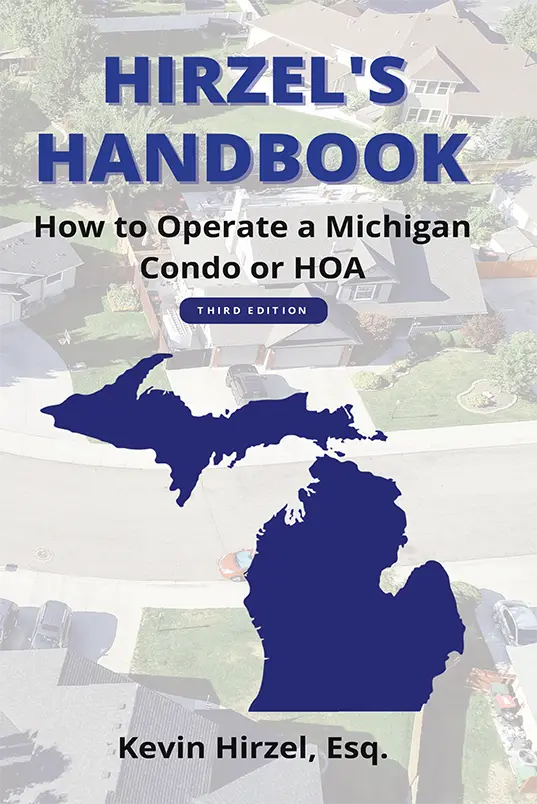
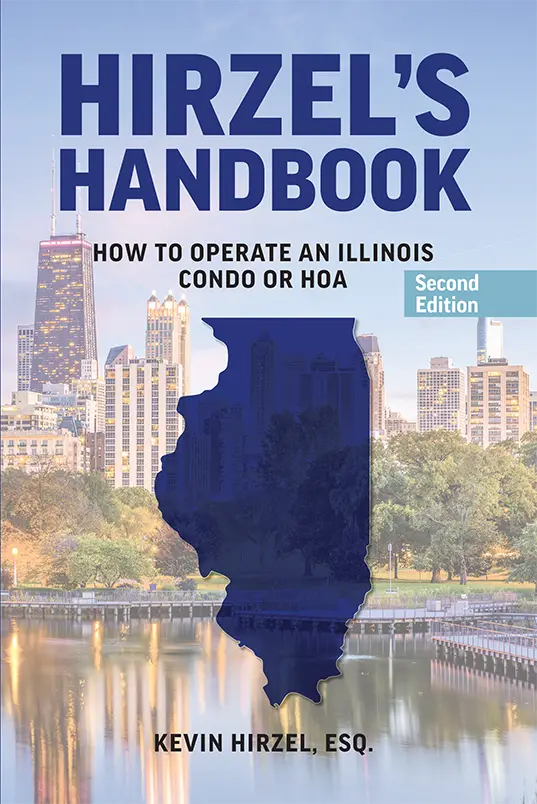
Education is a significant part of Hirzel Law’s approach. Kevin Hirzel is the author of Hirzel’s Handbook: How to Operate a Michigan Condo or HOA and Hirzel’s Handbook: How to Operate an Illinois Condo or HOA. The handbooks address recurring legal and operational issues involving governance, finances, insurance, enforcement, collections, developer turnover, document amendments, and Fair Housing. Hirzel Law also publishes legal articles, newsletters, and educational materials for condominium and HOA board members and property managers.
Volunteer board members don’t know what they don’t know.
Community association boards that understand their legal obligations are better positioned to avoid preventable mistakes, and choosing a community association law firm that points out changes in the law or potential blind spots is invaluable.
Pricing
How Should Your Board Think About Legal Pricing?
Price matters. Board members are spending association funds and have an obligation to consider cost. But the lowest hourly rate, or the lowest advertised retainer plan, does not necessarily produce the lowest total legal cost or the best value.
The Parable of the Hammer
A factory’s critical machine stops working. After its employees spend days trying unsuccessfully to fix it, the company calls an expert. The expert studies the machine for a few minutes, taps one particular spot with a hammer, and the machine starts working again.
The company receives a large invoice and asks for an itemization.
- $1
- Tapping the machine with the hammer
- $9,999
- Knowing where to tap
The same principle applies to legal services. An attorney who regularly handles a particular community association issue may charge a higher hourly rate but needs less time to identify the problem and recommend a solution. Conversely, originally inexpensive legal work could become costly if the association later pays another attorney to correct it, an improperly drafted or adopted amendment, for example, can create title or enforcement problems that force the association to pay twice for the same project.
The same caution applies to retainer plans. A fixed monthly fee can appear less expensive or more predictable, and it can work well in some circumstances, but boards should understand exactly what a plan includes and how the pricing model may affect service: how much attorney time is devoted to a question, how quickly non-urgent matters are addressed, and how extensively an issue is analyzed.
The Hirzel Law Answer
Hirzel Law generally does not recommend a monthly retainer model unless a client specifically prefers one. Our priority is to give attorneys the time they need to respond promptly, analyze the issue thoroughly, communicate a clear recommendation, and produce high-quality work. That does not mean hourly billing is always less expensive: for work that can be standardized without sacrificing quality, such as certain collection services through Ready Collect, we use flat fees to improve efficiency and predictability. Hirzel Law knows where to hit the proverbial hammer when it comes to community association law!
Boards should therefore look beyond price and compare experience, responsiveness, quality, efficiency, and scope of service, rather than choosing a community association attorney solely because one pricing model appears less expensive. For a more detailed discussion on pricing and how to receive maximum value from your community association law firm, please review the following:
Service Model
Will One Attorney Handle Every Legal Matter?
Boards should ask how a law firm decides which attorney will handle a community association’s different legal needs. Collections, general counsel work, transactions, governing document projects, and litigation require different systems and skills. One attorney may be capable of handling all of them, but that does not necessarily mean a “jack of all trades” model gives a condominium or homeowners association the strongest attorney for every matter.
The Hirzel Law Answer
Hirzel Law is organized into practice-focused teams, or PODs, that concentrate on different types of community association work. While you will have an attorney as a primary point of contact, rather than expecting one attorney to handle collections, day-to-day general counsel matters, transactional work, and litigation, matters are assigned to attorneys whose work is focused on the relevant area.
This structure allows an association to maintain a relationship with one community association law firm while benefiting from attorneys whose day-to-day work is concentrated on the particular legal issue the board needs to address. It also allows attorneys in different PODs to collaborate when a matter crosses practice areas. A general counsel issue that develops into litigation, for example, can be referred to attorneys who regularly litigate community association disputes, without requiring the association to start over with an entirely different law firm.
Your BoardOne primary attorney contact
- Collections PODassessment recovery
- General Counsel PODday-to-day board questions
- Transactions PODgoverning documents & contracts
- Litigation PODdisputes, defects, trials
Switching Firms
When Should a Condo or HOA Board Consider Changing Law Firms?
A board should not change attorneys simply because it receives legal advice it dislikes. Good attorneys sometimes have to tell boards things they do not want to hear. But a board may reasonably reevaluate the relationship when recurring problems include:
- Unanswered calls or emails
- Excessive delays
- Advice that does not provide a clear path forward
- Repeated unfamiliarity with community association issues
- Avoidable errors
- Insufficient litigation capability when disputes escalate
- Difficulty understanding legal fees or invoices
- Loss of confidence in the attorney-client relationship
A community association is not required to remain with the same law firm forever, nor should it automatically use a particular firm simply because a management company recommended that firm. We say this even though many management companies recommend us, as boards need to understand their options if they are not happy. In most cases, transitioning to a new law firm is seamless, and the new firm handles requesting any active files and picks up where the former firm left off.
Honest Fit
Is Hirzel Law the Right Community Association Law Firm for Every Board?
No. A board looking solely for the lowest hourly rate may find another law firm that charges less. An individual homeowner seeking representation against a condominium or homeowners association should hire different counsel, because Hirzel Law represents community associations and does not represent individual owners against them.
We are also unlikely to be the right fit for a board looking for an attorney to approve a decision the board has already made, regardless of the legal risk or whether the position can be legally supported.
We tell community association boards what they need to hear, not simply what they want to hear.
Hirzel Law is a strong fit for boards that value:
- Substantial experience representing condominium associations, homeowners associations, and other community associations
- Attorneys who regularly handle collections, governing document amendments, general counsel matters, Fair Housing issues, developer turnover, construction defects, real estate matters, and litigation
- Focused teams that allow the association to work with attorneys who concentrate on the type of matter at issue rather than relying on one attorney to handle everything
- Clear and timely communication
- Practical, prevention-focused legal advice that helps boards avoid costly mistakes
- Efficient collection processes, including flat-fee options and systems designed specifically for community associations
- Governing documents that are regularly updated, tailored to the community, and written in plain English rather than relying on outdated forms or unnecessary legalese
- Attorneys who understand the interpersonal realities of board governance and owner disputes
- Meaningful litigation capabilities when a dispute cannot be avoided
- Educational resources, including Hirzel's Handbooks, legal updates, and other materials that help boards make better decisions
- Quality, responsiveness, efficiency, and overall value rather than selecting legal counsel solely by hourly rate
The 10 questions every board should ask before hiring a condo or HOA law firm
A board does not need to ask dozens of questions when interviewing prospective legal counsel. These will reveal much of what matters.
- How much of your practice involves representing condominium and homeowners associations?
- How many community associations have you represented, and have you worked with associations of our size, type, and management structure?
- How often does your firm handle the kinds of legal matters our association is likely to face, including collections, governing document amendments, general counsel matters, Fair Housing issues, developer turnover, construction defects, and litigation?
- Will one attorney handle all of our legal work, or does your firm assign matters to attorneys who focus on particular types of community association matters?
- What is your normal response time when a board or property manager has a legal question, and how are urgent matters handled?
- How do you charge for legal services, and how should our board compare hourly rates, flat fees, retainers, and other pricing models when evaluating total value?
- How does your firm help boards control legal expenses without sacrificing responsiveness or the quality of the legal work?
- What do your existing community association clients say about your responsiveness, communication, knowledge, and overall service?
- What educational resources, industry involvement, writing, teaching, or other experience demonstrates that your attorneys regularly work with the issues community associations face?
- What types of associations or boards are not a good fit for your firm, and why should our board choose your firm instead of another community association law firm?
A law firm should be comfortable answering these questions candidly. The answers should help the board evaluate not only the firm’s experience but also its responsiveness, pricing philosophy, service model, reputation, and the likelihood that the relationship will be a good fit.
Community Association Law
Talk With a Condo & HOA Attorney
If your condominium association, homeowners association, or other community association is evaluating legal counsel in Michigan or Illinois, Hirzel Law can help your board determine whether our firm is the right fit. We serve community associations throughout Michigan, including Metro Detroit, Grand Rapids, and Traverse City, and throughout Illinois, including Chicago and the Chicago suburbs.
Request a ProposalTalk with a Condo & HOA Attorney (866) 394-4642