3rd Edition — Michigan
Hirzel's Handbook
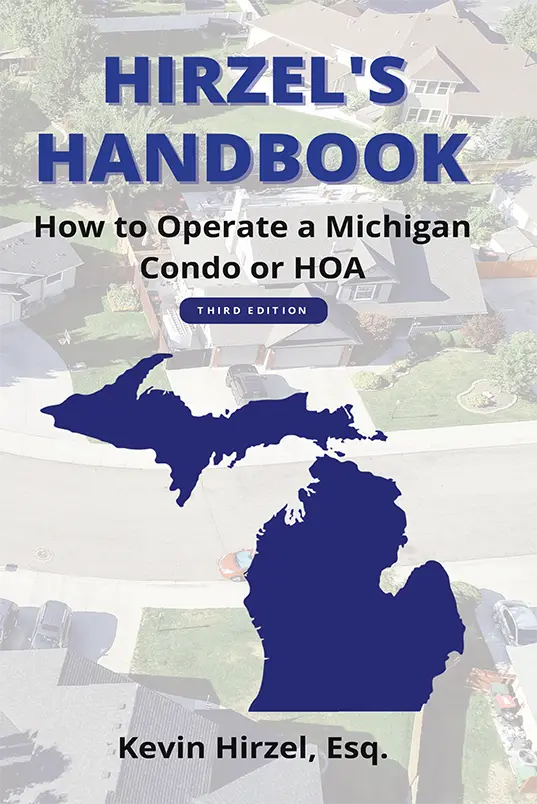
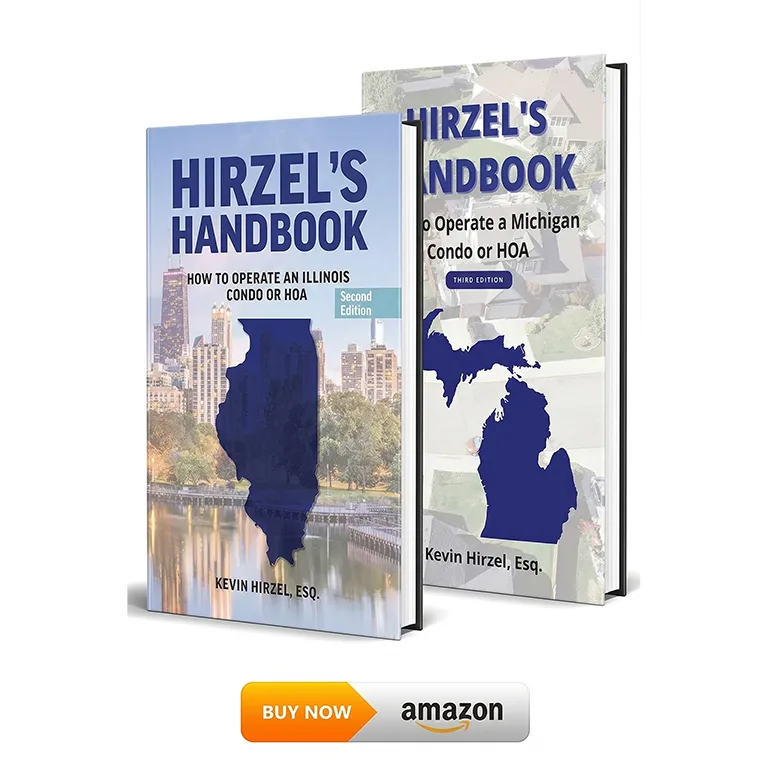
Want to learn the best practices for operating your Condo or HOA? Get your copy of Hirzel's Handbook 3rd Edition: How to Operate a Michigan Condo or HOA.
Also available on Kindle

About the Handbook
Your Complete Guide to
Community Association Management
About Hirzel’s Handbook
Need help learning the legal requirements and best practices for operating a condominium or homeowners association? Hirzel’s Handbook is a step-by-step guide for everything you need to know to successfully manage a Michigan community association. The book was designed as a resource for volunteer board members and property managers to understand the basic principles of community association operations, as most board members and property managers only receive “on the job training.” Hirzel’s Handbook fills the void and provides sage advice from an experienced community association attorney on properly operating a community association and avoiding common problems. The handbook covers operational issues, such as, architectural control decisions, association finances, corporate governance, meetings, and insurance. After reading Hirzel’s Handbook you will also understand how to handle more complex issues, such as transitioning an association from developer control, bylaw enforcement, collections, amending the governing documents, and Fair Housing.
Chapter Overview
What's Inside the Handbook
Each chapter covers a critical area of community association management, providing practical guidance you can apply immediately.
The introduction lays the framework for the book by providing the reader insight on what the basic principles are that govern community associations and the hierarchy of laws that apply to community associations.
Chapter one lays out the different types of condominium projects in Michigan, including mandatory and voluntary homeowners associations, the differences between a site condominium and homeowners associations, planned associations, master community associations, and similar resort associations.
Chapter two focuses on community association operations, expanding on the financial operations, governance, general operations, and insurance.
Chapter three will help the reader understand the duties of insurance carriers, requirements for associations, and various types of insurance.
Chapter four will help the reader understand how to transition the association from developer control to owner control.
Chapter five discusses the methods that a condominium association can use to enforce the governing documents.
Chapter six covers community association collections and expands on how your condominium association can handle foreclosures, when a bank or other mortgage holder is obligated to pay assessments after a foreclosure, and what happens when an owner declares bankruptcy.
Chapter seven reviews the process of amending the governing documents, providing information regarding when your petition or a supermajority vote to be approve, which documents most your master deed, condominium bylaws, or association, not forget that your governing documents may be outdated, the process for amending a master deed, condominium bylaws, or even rules, the types of amendments that do not require a co-owner vote, and how to properly use rule-making authority.
Chapter eight focuses on fair housing, such as the process for fair housing claims, theories of liability under the Fair Housing Act, disability discrimination, familial status limitations, race, color, or national origin discrimination, religious discrimination, and sex discrimination.
The conclusion provides key takeaways for operating a condominium or homeowner's association, next steps, and an opportunity to recognize a board's efforts for your association.